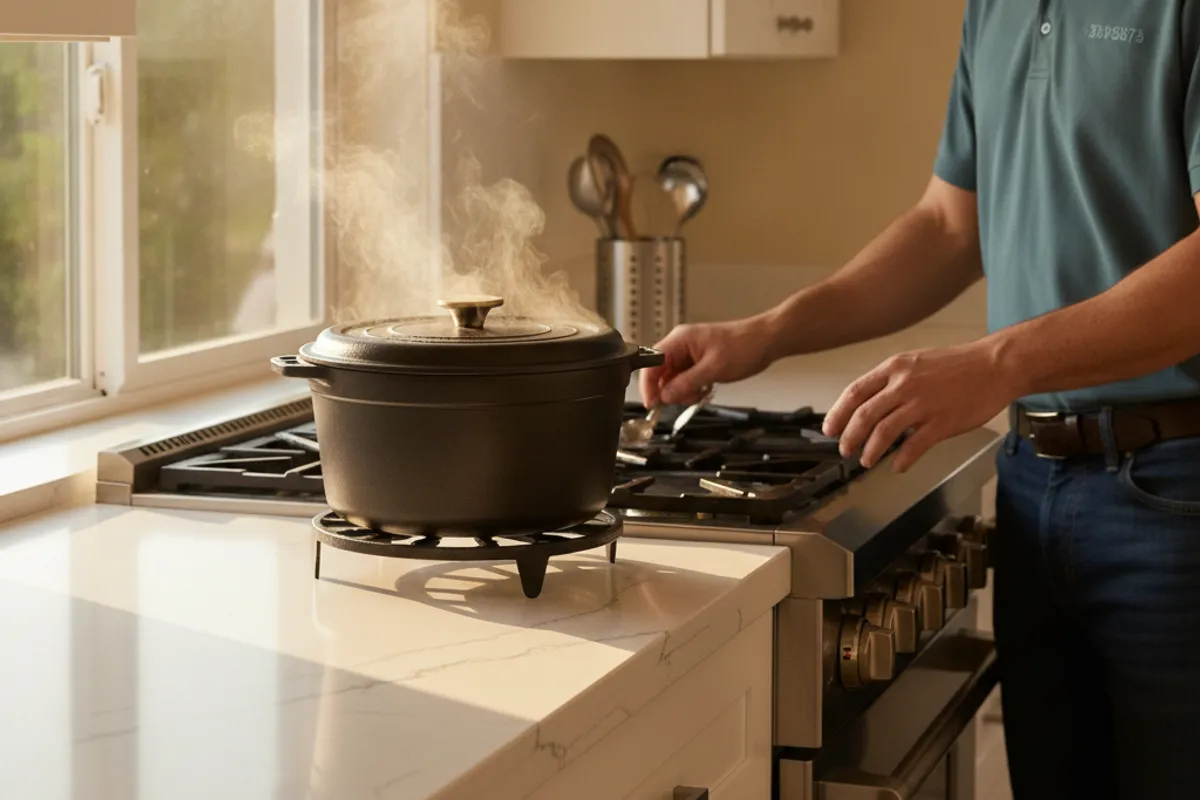
The short answer: not as heat resistant as people assume
Quartz countertops are durable, low-maintenance, and excellent for kitchens. Heat resistance is not their strongest trait. This is the most common surprise for homeowners who install quartz, and it’s worth understanding before you have a $5,000 countertop installed.
The issue is the resin. Engineered quartz is approximately 90-95% crushed quartz mineral and 5-10% polymer resin. The quartz itself handles heat well. The resin does not. Sustained heat above roughly 150°F can cause the resin to soften, discolor, or fracture. A pan pulled from a 500°F oven and set directly on quartz can damage the surface.
What kinds of heat cause damage
Very hot pans: A cast iron skillet, stainless pan, or baking sheet pulled directly from a hot oven or off a high-heat burner and set on quartz without a trivet is the most common damage scenario. The localized, intense heat at the contact point can cause the resin to crack (a phenomenon called thermal shock) or discolor permanently.
Slow cookers and instant pots: Appliances that sit on the counter for extended periods at high temperatures can transfer enough heat to damage quartz over time. This is less acute than a hot pan but still a concern. A trivet or silicone mat under appliances that run hot is good practice.
Candle wax and heat guns: These are less common in daily use but worth noting. Candle wax dripped directly on quartz and the heat gun used to remove it can both damage the surface.
Sunlight through windows: In San Diego homes with large south or west-facing windows, sustained UV exposure can fade quartz over years of direct sunlight. This is rarely a dramatic effect but gradual fading is documented, particularly in lighter-colored quartz. This is one reason quartz is not recommended for outdoor countertops.
What does not damage quartz
Normal cooking activity. Setting a plate from the microwave, handling hot food, or placing a pan that has cooled to the touch on the surface all create heat levels well within what quartz handles without issue. The concern is the extreme end: a smoking hot pan right off the stove, not a warm plate from lunch.
Hot water is not a concern. Quartz handles kitchen and bath water temperatures without any issue.
How to protect your countertops
Always use trivets. This is the single most effective protection. A silicone trivet, wooden trivet, or any heat-resistant pad between your hot pan and the counter prevents direct heat transfer. Trivets cost a few dollars and protect a $5,000 countertop indefinitely.
Let pans cool briefly on the stove. If you don’t have a trivet handy, leaving the pan on the stove for a few minutes while you serve the food eliminates most of the risk.
Use cooling racks for baking. Don’t move sheet pans or cast iron from the oven directly to the counter. Use a wire cooling rack on the counter, or set the hot item on the stove grates while you clear space.
If damage happens
Thermal damage to quartz is not repairable in the way that a scratch or chip sometimes is. Discoloration from heat is usually permanent. A crack or fracture from thermal shock requires replacement of the affected section.
This is not common. Most San Diego homeowners use quartz for years without any heat damage. But it happens, and it’s why the “heat resistant” language used in some marketing creates false confidence.
Comparing quartz to other materials
Granite: Natural stone with no resin. Handles heat much better than quartz. You can technically set a hot pan on granite without immediate damage, though it’s not recommended as a practice because extreme thermal shock can still crack natural stone.
Quartzite: Natural stone, also more heat-tolerant than engineered quartz for the same reason.
Marble: Natural stone, decent heat tolerance, but etches and stains more easily than the others.
Fired ceramic and stone surfaces: Very heat resistant. Natural stone countertops and fired surfaces handle hot pans without issue.
Butcher block: Worst heat tolerance of any kitchen countertop material. Burns and scorches immediately.
For a comparison of quartz against other countertop materials, see the quartz vs granite guide.
The bottom line for San Diego kitchens
Quartz is an excellent kitchen countertop material. The heat limitation is real but manageable. If you cook regularly and tend to move pans from stove to counter without thinking about it, add trivet habits to your routine before the countertops are installed rather than after. A little habit change protects the investment.
If you cook on high heat frequently and want the freedom of not worrying about trivets, granite or quartzite are worth considering as an alternative. The maintenance tradeoff (sealing granite vs. no-seal quartz) is the main counterpoint.
Call (858) 925-5546 to talk through material selection for your specific kitchen with a San Diego countertop specialist. We connect you with insured local fabricators who can help you weigh the options.
What temperature can quartz countertops handle?
Quartz can handle typical kitchen temperatures. The concern is sustained high heat above approximately 150°F at the contact point, which can soften or crack the resin binder in engineered quartz. A pan pulled from a 400-500°F oven and set directly on quartz without a trivet can cause thermal shock damage.
Can you put hot pots on quartz countertops?
You can, but it is not recommended. The risk of thermal shock damage to the resin increases with the temperature of the pan and how long it sits on the surface. The standard recommendation is to always use a trivet or cooling rack.
Is quartz more or less heat resistant than granite?
Less. Granite is natural stone with no resin, so it tolerates heat better than engineered quartz. Quartz’s advantage over granite is its non-porous surface and no-seal maintenance requirement, not heat resistance.