Quartz vs granite consultation for San Diego County homeowners
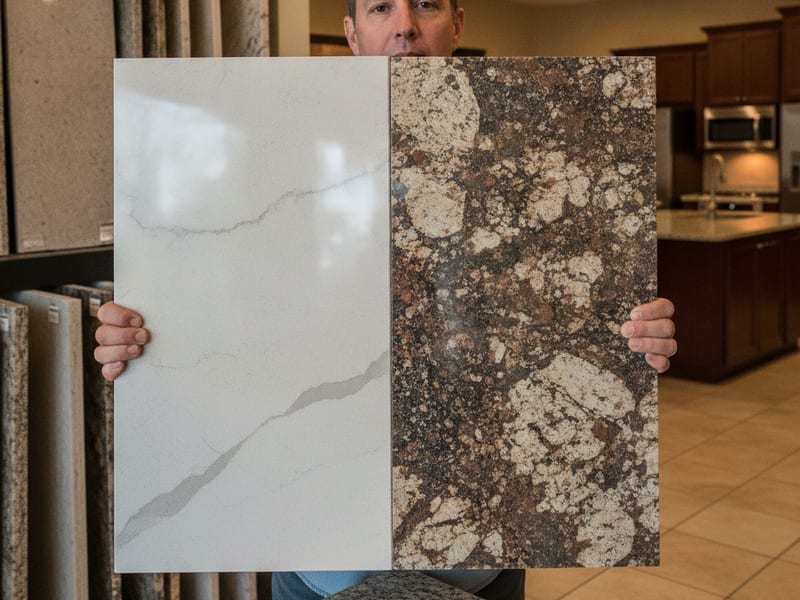
Quartz and granite are the two most common countertop materials in San Diego kitchen remodels, and they differ in meaningful ways: quartz is non-porous and never needs sealing, granite handles direct heat better and has more natural variation slab to slab. Counter Pro SD refers insured local fabricators who carry both materials and can walk you through the tradeoffs in person before you commit to either. Verify your fabricator's license at cslb.ca.gov.
What's included in this service?
- Match homeowners with insured fabricators who carry both quartz and granite and can compare them in person
- Coordinate showroom or slab yard visits where you can see full-size samples of both materials
- Facilitate discussion of sealing requirements, heat resistance, and long-term maintenance differences
- Connect you with fabricators who can provide side-by-side cost comparisons for your specific layout
- Help you understand how coastal San Diego humidity and lifestyle factors into the material choice
- Follow up after the consultation to match you with the right fabricator once you've decided on material
When do you need this service?
- You're planning a kitchen or bathroom remodel and aren't sure whether quartz or granite is right for your needs
- You like the look of natural stone but are concerned about maintenance requirements
- You've heard conflicting information about heat resistance and want a clear answer
- You want to compare material costs before committing to a budget for your remodel
- You're deciding between a uniform quartz pattern and the natural variation of granite
What do homeowners ask about Material Consult?
What is the biggest practical difference between quartz and granite for a San Diego kitchen?
Sealing. Granite is a natural porous stone that absorbs liquids over time if not sealed, so it requires resealing roughly every one to three years depending on use. Quartz is engineered and non-porous, so it never needs to be sealed. For families who cook frequently, quartz requires less ongoing maintenance.
Can I put a hot pan on a quartz countertop?
Quartz manufacturers recommend against it. Sustained heat above 150 degrees Fahrenheit can discolor or crack the resin binder in quartz. Granite tolerates direct heat better because it is a natural stone without resin. If you cook with heavy cast iron or frequently slide pots from stovetop to counter, granite may be the more forgiving choice.
Is quartz or granite more expensive in San Diego?
Pricing overlaps considerably. Entry-level quartz and granite are both available in the $55-$80 per square foot installed range. Premium quartz brands like Cambria run $100-$130 installed; high-grade exotic granites can reach similar prices. The fabrication and installation labor costs are comparable for both materials.
Does coastal San Diego humidity affect either material differently?
Humidity matters more for granite than quartz. Unsealed or under-sealed granite in a high-humidity environment can absorb moisture over time, which eventually affects appearance and can promote staining. Quartz is non-porous and handles coastal humidity without any special treatment, which is one reason it's popular in San Diego coastal kitchen remodels.
How do I know which material fits my style preferences?
Quartz offers consistent patterning and color that does not vary the way natural stone does, which appeals to homeowners who want a predictable, uniform look. Granite offers natural variation, unique slab patterns, and a look that cannot be exactly replicated. The best way to decide is to view full-size slabs of both materials in person at a slab yard.
Where do we offer Material Consult in San Diego County?
We provide material consult in every city and community in San Diego County. Pick your city for local climate notes and service specifics.
See material consult in all 67 cities
Need material consult in San Diego County?
Call for a free quote. Most work scheduled within the week.