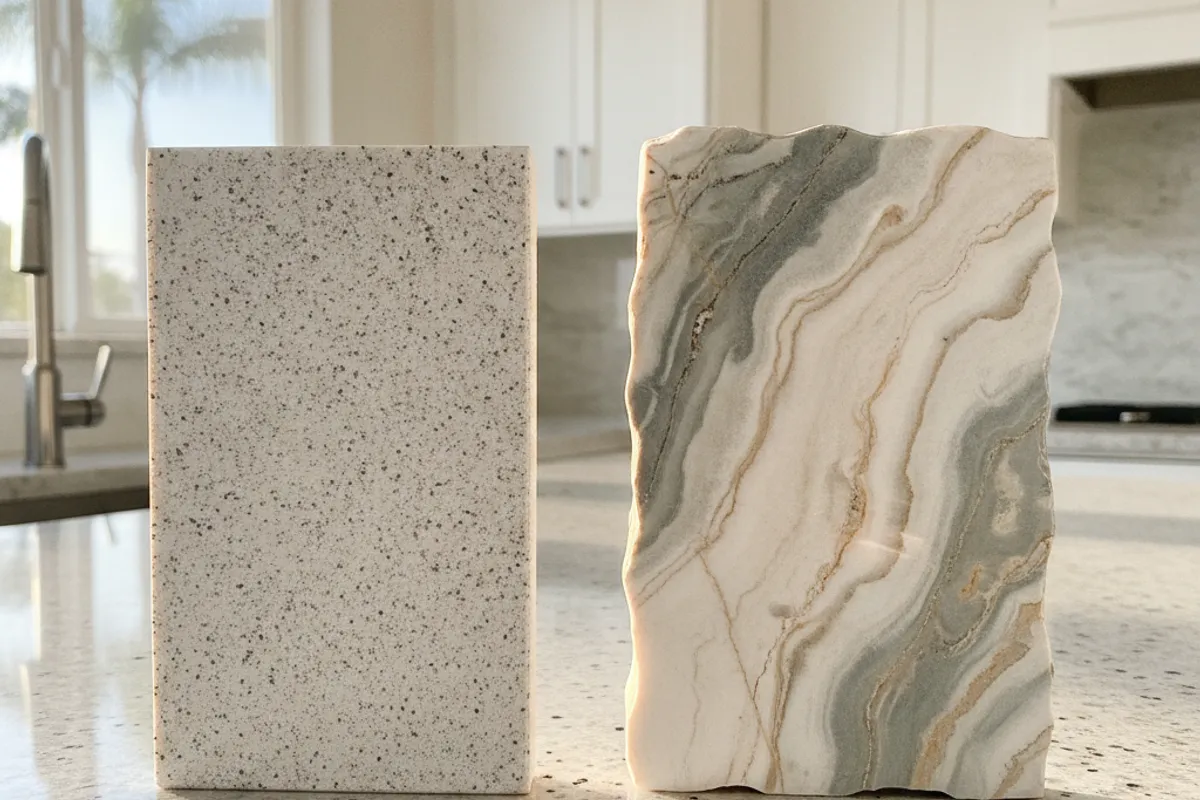
Two names, two completely different materials
This is one of the most common points of confusion in countertop shopping. Quartz and quartzite are not variations of the same thing. They are different materials with different origins, different maintenance requirements, and different performance characteristics. The names are similar enough that homeowners mix them up regularly, and some showrooms don’t help by displaying them side by side without clear labeling.
Here is the short version: quartz is engineered stone made in a factory. Quartzite is a natural stone quarried from the earth. Understanding that distinction is the starting point for everything else.
What quartz is
Engineered quartz is a manufactured product. Crushed natural quartz (the mineral) is bound together with polymer resin under heat and pressure. The result is a dense, non-porous slab with controlled color and pattern. Brands like Silestone, Caesarstone, Cambria, and MSI Q all produce engineered quartz.
The manufacturing process means you get consistency. You can order the same color and pattern for multiple slab sections and they’ll match. The resin makes the surface non-porous, so it doesn’t absorb liquids and doesn’t require sealing.
What quartzite is
Quartzite is a natural metamorphic rock. It started as sandstone, and over millions of years, heat and pressure fused the quartz sand grains into a solid crystalline rock. It’s quarried in large slabs the way granite and marble are.
Quartzite is very hard, rating 7 or higher on the Mohs scale, making it harder than most granite. It’s also heat-resistant because it has no resin binder. The appearance is often compared to marble: pale backgrounds with dramatic veining in whites, grays, and sometimes warm golds or pinks.
What quartzite is not: sealed at the factory. Like granite, quartzite is porous and needs periodic sealing to prevent staining.
The maintenance difference
This is where the practical choice becomes clear for most homeowners.
Engineered quartz requires no sealing. The resin fills the pores. Soap and water clean it. It’s the lower-maintenance option.
Quartzite requires sealing at installation and re-sealing periodically, typically every 1-2 years for kitchen surfaces. The porosity also varies by the specific stone. Some quartzite is relatively tight; other slabs are quite porous and will stain from cooking oils or wine if not sealed. Before purchasing quartzite, a water bead test on the specific slab tells you how porous it is.
Quartzite also etches. Acids (lemon juice, vinegar, certain cleaners) can dull the polished surface on calcareous stones. Many quartzites don’t etch as badly as marble, but it depends on the specific stone’s calcium content.
Appearance
This is where quartzite wins for many homeowners. Natural quartzite has movement and character that engineered quartz replicates but doesn’t fully match. If you want a genuine natural stone look, particularly the kind of dramatic white marble appearance popular in San Diego’s coastal and North County kitchens, quartzite delivers it.
Engineered quartz has improved dramatically in the past decade. High-end quartz slabs with fine veining come very close to natural stone visually. But they’re engineered to be consistent, which is the opposite of natural stone’s appeal.
If your kitchen design requires matching multiple large slab sections (a common situation in open-plan San Diego homes with long runs of counter and an island), engineered quartz is easier to match. Quartzite slabs vary, and getting a consistent look across multiple cuts requires careful slab selection.
Cost in San Diego
Quartzite runs $75-$140 per square foot installed in San Diego County, depending on the specific stone and its rarity. Popular options like Super White or Taj Mahal quartzite are at the lower end of that range; rarer stones with complex coloring push toward the top.
Engineered quartz runs $55-$120 per square foot installed, with mid-grade options in the $65-$90 range. Premium designer quartz at the top of the price range often costs similarly to entry-level quartzite.
The maintenance cost difference is minor but real. Sealing a quartzite countertop costs $15-$40 per treatment every 1-2 years.
For a full picture of installation costs in San Diego, see the countertop cost breakdown.
Durability comparison
Quartzite is harder and more heat-resistant than engineered quartz. Hot pans on quartzite are not a concern the way they are with quartz. The resin in engineered quartz can discolor or crack with sustained high heat.
Quartzite is also acid-resistant compared to marble (which etches badly), though some quartzites are more susceptible than others. Test the specific stone with a drop of lemon juice in an inconspicuous spot if you’re unsure.
Engineered quartz holds up better at edges and corners in high-traffic kitchens. The resin gives it flexibility that prevents some of the edge chipping common in natural stone.
Which one fits San Diego homes
For most San Diego kitchens where ease of maintenance and consistent appearance are the priorities, engineered quartz is the practical default. The no-seal requirement and the predictable performance make it easier to live with.
Quartzite makes sense for homeowners who want genuine natural stone and are comfortable with the maintenance commitment. It also makes more sense in kitchens where heat resistance matters, or where the design calls for the specific natural stone character that engineered products don’t fully replicate.
If you’re looking at both materials, visit a slab yard and handle actual slabs. Photos on screens show color but not texture, weight, or the way light hits the surface.
Call (858) 925-5546 to get connected with a San Diego countertop fabricator who can show you options in both materials and quote your specific project.
Is quartzite the same as quartz?
No. Quartz is engineered stone made from crushed quartz mineral and resin. Quartzite is a natural metamorphic rock quarried from the earth. They look similar in some colors but are made differently and have different maintenance requirements.
Does quartzite need to be sealed?
Yes. Quartzite is a natural stone and is porous. It needs sealing at installation and re-sealing periodically, typically every 1-2 years for kitchen surfaces. Engineered quartz does not require sealing.
Which is more expensive, quartz or quartzite?
At the mid-range they overlap. Engineered quartz runs $55-$120 installed in San Diego; quartzite runs $75-$140. Premium quartzite is often more expensive than mid-grade quartz, but entry-level quartzite and high-end quartz land in a similar range.