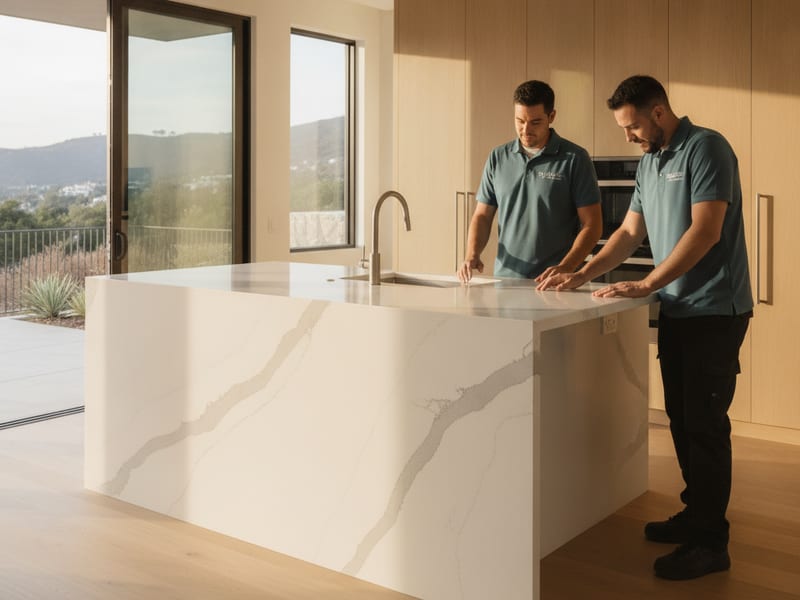
Waterfall edge countertop installation in San Diego County
A waterfall edge countertop wraps the quartz slab from the horizontal surface straight down the vertical side of an island or peninsula to the floor, with a mitered joint at the corner where the two pieces meet. The joint quality determines whether the finished product looks like continuous stone or a visible seam. Counter Pro SD refers insured local fabricators who cut and polish mitered waterfall edges at their shop before delivery. Verify license status at cslb.ca.gov before work begins.
What's included in this service?
- Match homeowners with insured fabricators who are experienced with mitered waterfall joints
- Coordinate material selection so the horizontal top and vertical panel come from the same slab
- Facilitate planning for flooring clearance so the waterfall panel sits properly against the finished floor
- Connect you with fabricators who cut and polish the miter at 45 degrees in their shop before delivery
- Arrange one- or two-end waterfall installations on kitchen islands and peninsulas
- Confirm that the finished joint reads as continuous stone from the front-viewing angle
When do you need this service?
- You're building or upgrading a kitchen island and want a high-end, contemporary look
- You've seen waterfall edge islands in design inspiration and want to understand what the installation involves
- Your peninsula has an exposed end that you want to finish with matching quartz instead of painted drywall
- You want the quartz slab to run to the floor on one side for a built-in look
- You're working with a kitchen designer who has specified a waterfall edge in the design drawings
What do homeowners ask about Waterfall Edges?
What makes a waterfall edge different from a standard edge profile?
A standard edge profile (eased, bullnose, ogee) finishes the front edge of the countertop slab. A waterfall edge is a separate full-height slab panel that runs vertically down the side of an island or peninsula from the countertop to the floor, connected to the horizontal surface with a 45-degree mitered joint.
Does the vertical panel have to come from the same slab as the horizontal top?
Ideally yes. Using the same production lot ensures the color and veining are as close as possible across the joint. Because quartz is engineered, the pattern is more consistent than natural stone, but lot variation still exists. Request same-slab cutting from your fabricator during templating.
How is the bottom of the waterfall panel finished where it meets the floor?
The panel typically ends just above the finished floor level with a polished bottom edge. If the floor is not yet installed, the fabricator accounts for the floor thickness so the panel sits at the right height. In renovations with existing flooring, the panel is cut to run tight against the floor with a minimal gap sealed with silicone.
Can I add a waterfall edge to my existing island after the fact?
Sometimes, but it depends on how the existing countertop edge was cut. If the original countertop was cut with a standard edge profile, the fabricator would need to re-cut the side edge to a clean 45 degrees for the miter joint. This is possible but adds cost. Confirm feasibility during the templating visit.
Is a waterfall edge worth the added cost for a San Diego home?
It depends on your goals. Waterfall edges are popular in contemporary and transitional kitchen designs and can add visual value in higher-end markets like La Jolla, Del Mar, and Rancho Santa Fe. In a kitchen being updated primarily for resale in a mid-range market, the added cost may not return dollar for dollar.
Where do we offer Waterfall Edges in San Diego County?
We provide waterfall edges in every city and community in San Diego County. Pick your city for local climate notes and service specifics.
See waterfall edges in all 67 cities
Need waterfall edges in San Diego County?
Call for a free quote. Most work scheduled within the week.